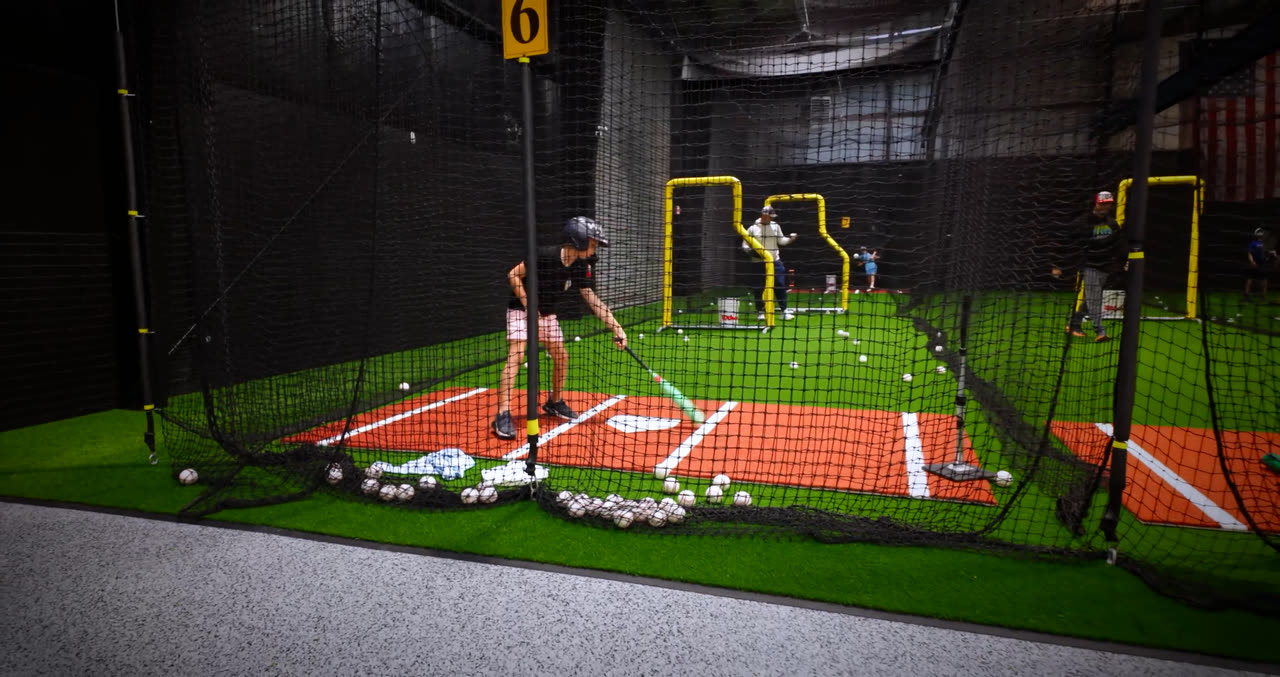
Every baseball and softball parent hears the same buzzwords at the field: bat speed and bat control. Coaches talk about them like they are magic. But when your player is standing in the box, which one actually helps them get a hit? And more importantly, which one should they work on first? The answer is simpler than most people think, and getting it right can save your young hitter months of frustration.
At Cage Time, we watch hundreds of swings every week, and we see this question play out live. So let’s clear up the confusion, break down what each skill really means, and give you a smart game plan for helping your player grow.
What Bat Speed and Bat Control Really Mean
Let’s keep this plain. Bat speed is how fast the barrel moves through the hitting zone. More bat speed means the ball jumps off the bat harder and travels farther. Bat control is how well a hitter can put the barrel exactly where they want it, on time, on all kinds of pitches. One is about power. The other is about precision.
Here is a quick way to picture it. Imagine two players standing side by side. The first one has a huge, fast swing but no idea where the barrel is going. The second one has a calmer swing but squares up nearly every pitch. On paper, the first kid looks more impressive in warmups. But over a full game, the second kid gets on base again and again while the first one racks up strikeouts. That gap is the whole story of youth hitting.
Here is the trap a lot of families fall into. They see a big kid crush a ball at the park and think, “We need more speed!” So the player starts swinging as hard as humanly possible. The problem? A fast swing that misses is still a strikeout. Speed without control just makes outs happen faster.
Why Bat Control Should Come First
For most young hitters, we build control before speed. Think about it like learning to drive. You don’t put a new driver on the highway going 80 miles an hour. You teach them to steer, brake, and stay in the lane first. Hitting works the same way.
When a young player learns to consistently make solid contact, a few great things happen:
- They put more balls in play, which builds confidence fast
- They learn to track pitches and lay off the bad ones
- They develop a repeatable, balanced swing they can trust
- They stop the ugly habit of lunging and over-swinging
- They start enjoying at-bats again instead of dreading them
Once that solid, controlled swing becomes second nature, adding speed is like pouring gas on a fire that is already lit. You can’t speed up a swing that isn’t working yet. That is why we start with the foundation. A player who chases raw speed before they own their swing usually builds bad habits that take twice as long to fix later.
How We Build Control at Cage Time
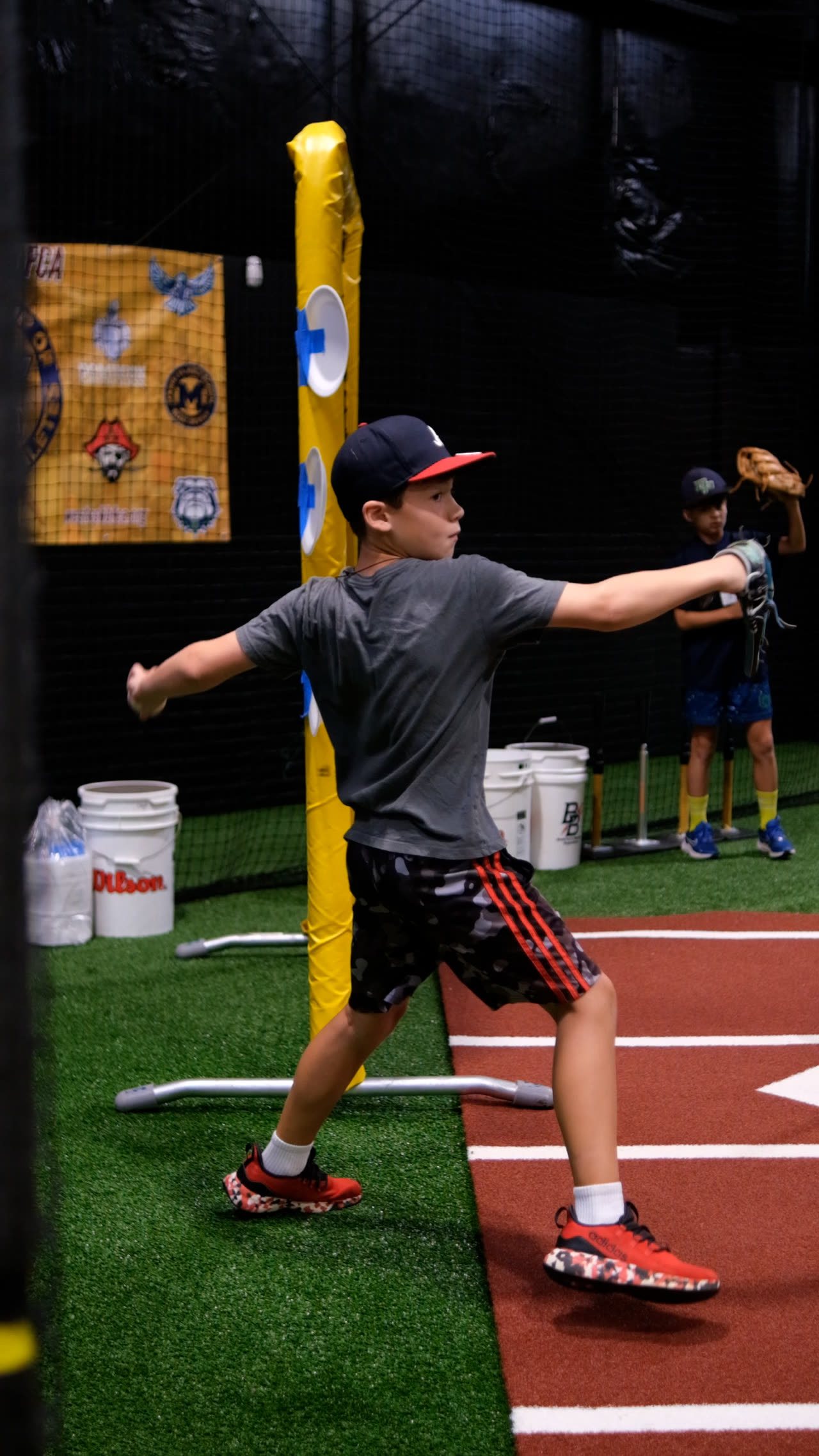
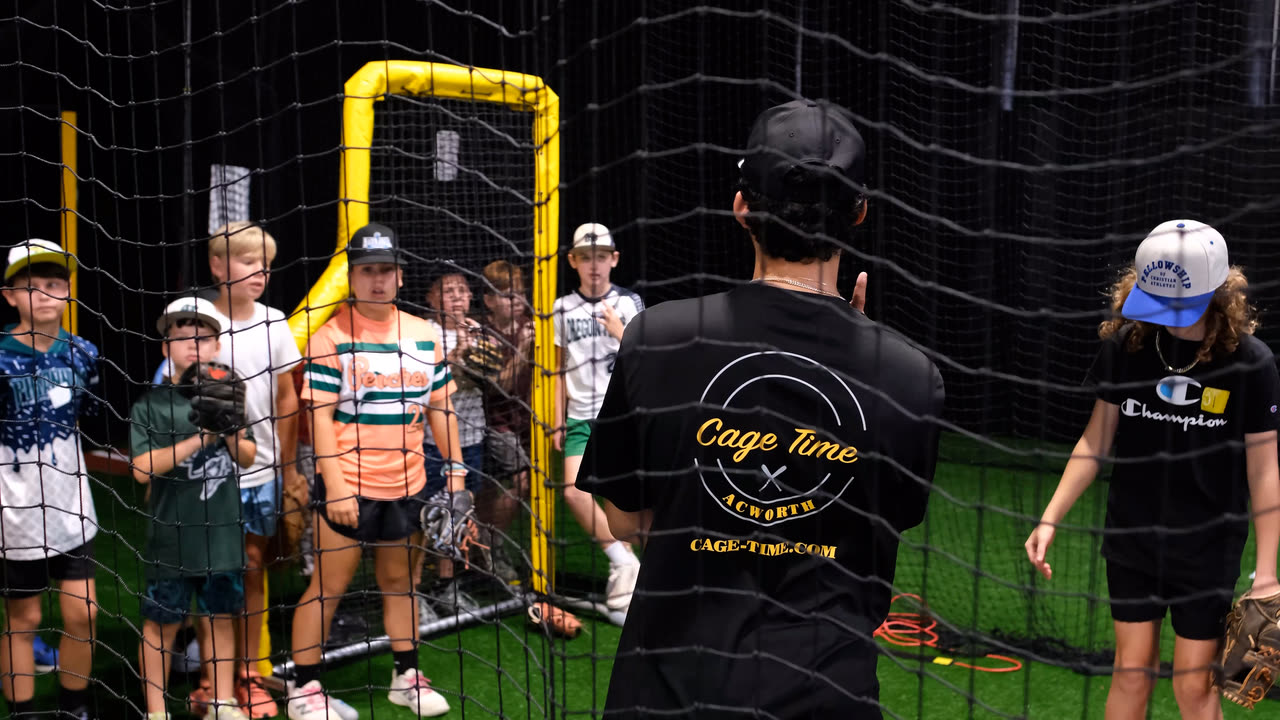
Good news, parents. Building bat control is not boring, and it does not take fancy gear at home. In our cages, we use a few simple tools to help players feel the difference. Tee work is our best friend, because it lets a hitter groove the same clean path over and over without worrying about a moving pitch.
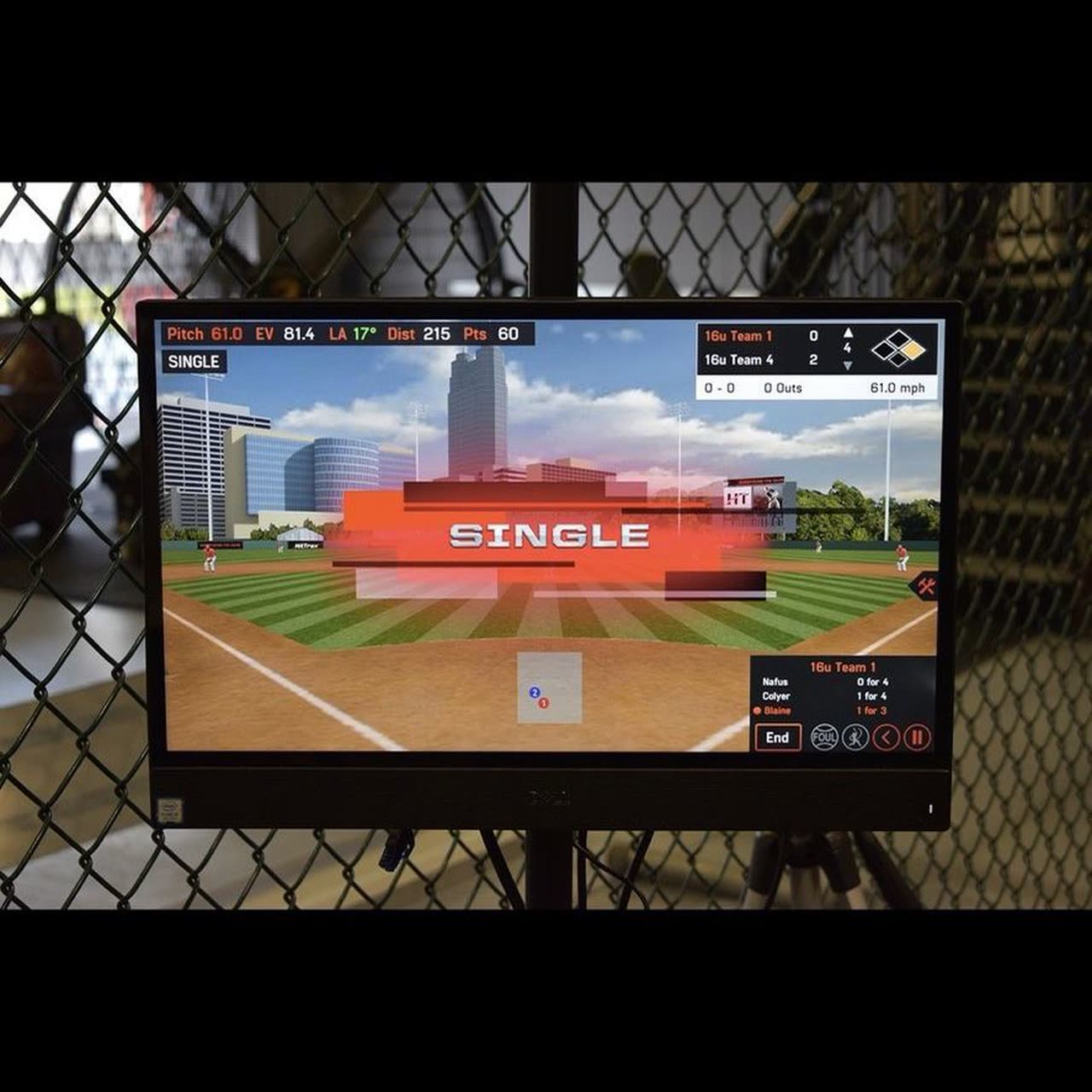
From there we move to soft toss and front toss, then to live reps off our Hack Attack pitching machines, which throw accurate, repeatable pitches so your player can dial in their timing. We even use our HitTrax simulators to show real swing data on a screen, so your player can see exactly where the ball is going and how square their contact is. When a kid sees proof that they are hitting line drives, something clicks that no lecture ever could.
Simple Control Drills You Can Try
- Tee to opposite field: Have your player try to hit the ball the other way. This forces them to stay back and control the barrel.
- Two-strike swings: Practice choking up and just putting the ball in play. Great for control and mental toughness.
- Freeze and check: After each swing, freeze the finish. A balanced finish means a controlled swing.
- Inside-outside tee: Move the tee to the inside and outside corners so your player learns to square up pitches in every part of the zone.
What Control Looks Like in a Real At-Bat
It is one thing to talk about control in a cage. It is another to see it pay off in a game. A hitter with real bat control does the little things that win at-bats. They foul off a tough pitch to stay alive instead of striking out. They shorten up with two strikes and poke a single the other way. They lay off the pitch just off the plate because their eyes and hands are working together, not racing each other.
Coaches love these hitters because they are dependable. When the game is on the line, you want the kid at the plate who can put the ball in play and make something happen, not the one hoping to get lucky with one giant swing. Control turns pressure at-bats into productive at-bats. That reliability is worth more than a highlight-reel home run that shows up once a month.
When to Start Adding Bat Speed
So when does speed come into the picture? Once your player can repeat a balanced, controlled swing and make regular contact, it is time to turn up the power. At this stage we work on stronger lower-body drive, quicker hands, and better rotation. These are the things that add real bat speed without wrecking the swing your player already built.
This is also where our brand-new weight room and our speed and agility training with Quincy, a former NFL athlete, come in. Real bat speed comes from a strong, athletic body, not just swinging harder. Strength is the engine, and control is the steering wheel. Your player needs both, but in the right order.
The Bottom Line for Parents
If you take one thing from this, let it be this: control first, then speed. A young hitter who can put the barrel on the ball is already ahead of the kid who only swings for the fences. Once that foundation is solid, we add strength and speed to turn contact into damage. Remember our mantra, get 1% better every day, and this whole thing stops feeling overwhelming.
Every great hitter you have ever watched went through this same path. There are no shortcuts, but there is a smart way to do it, and we would love to walk your player through it. You do not have to figure it out alone, and you do not have to guess. That is exactly what our coaches are here for.
Ready to Build a Better Swing? Book Your Cage
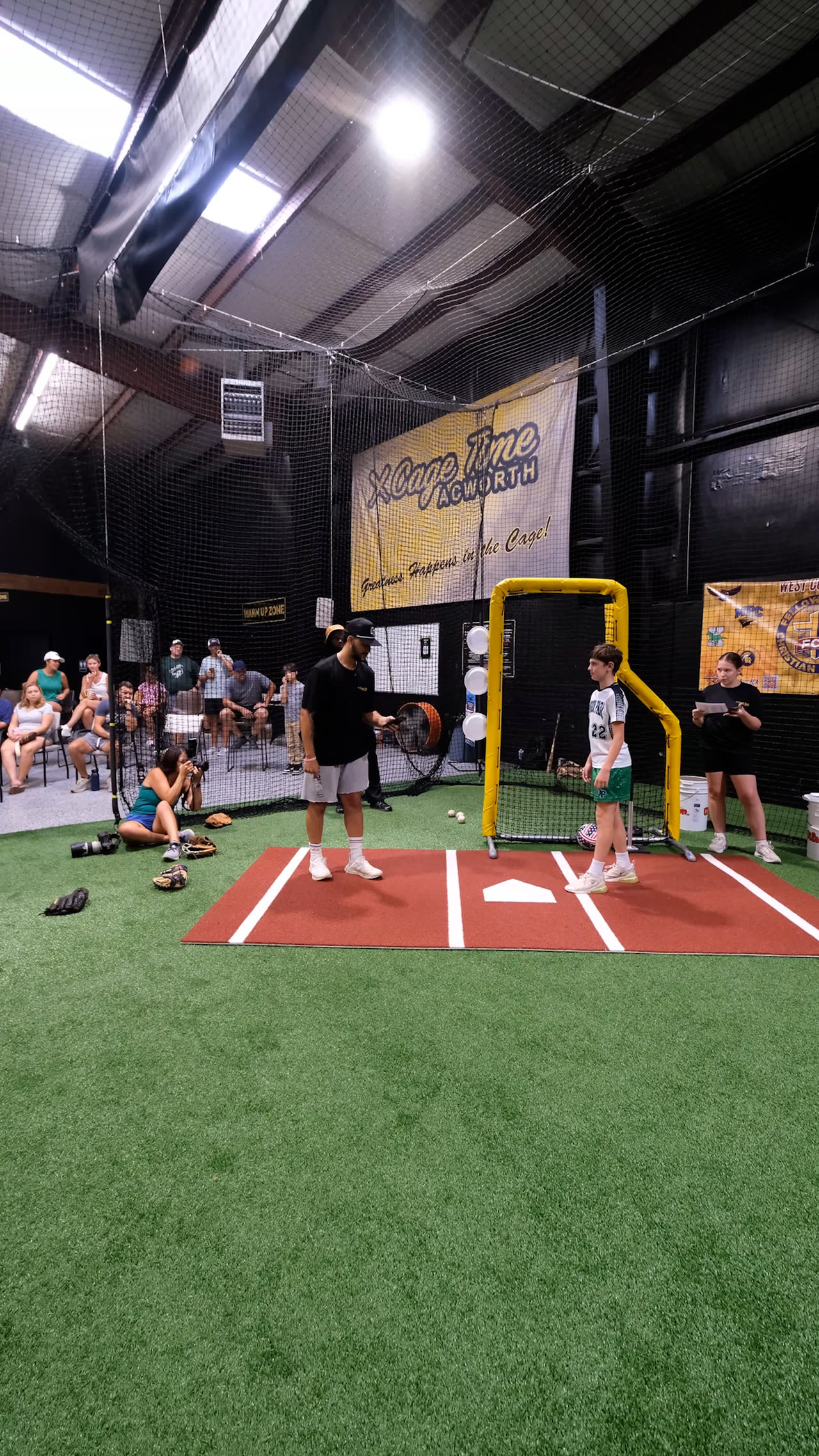
Whether your player needs to lock in their control or add some serious pop, we are here to help. Come see us for cage rentals, private lessons, or a HitTrax session that shows exactly what their swing is doing. Book Your Cage today by calling or texting (770) 779-9462, visiting cage-time.com, or stopping by 4946 Cobb Pkwy NW in Acworth, GA. Follow us at @cagetimeacworth. We proudly serve baseball and softball families across Acworth, Kennesaw, Woodstock, and all of Cobb County. Greatness happens in the cage, and we cannot wait to see your player grow.
Ready to get 1% better?
Book a cage, a lesson, or a membership at Cage Time Acworth.
Book Your Cage