Every parent loves the sound of a ball jumping off the bat. That crack is more than fun to hear — it tells you your hitter is putting real energy into the ball. Exit velocity is simply how fast the ball leaves the bat, and it is one of the clearest signs of a strong, healthy swing. The good news? You can train it, and it grows faster than most people think.
At Cage Time in Acworth, we watch kids add real speed to their swings every week. It is not magic. It is a handful of smart drills done the right way, repeated with a little focus. Here are five of our favorites that build power you can actually measure — plus a few coaching notes to help you get the most out of each one at home or in our cages.
Why Exit Velocity Matters More Than Ever
Bat speed and exit velocity are the numbers college coaches and travel-ball scouts look at first. A ball hit harder gets through the infield faster, drops in for hits more often, and travels farther over the fence. Soft contact gets caught; hard contact finds grass. When your hitter learns to swing with real intent, they stop hoping for bloop singles and start driving the ball with confidence.
Here is the part parents love: exit velocity rewards effort you can actually see on a screen. With our HitTrax simulators, your player watches the number climb drill after drill. Nothing keeps a kid focused like watching their own progress in real time. It also gives you an honest baseline. Once you know your hitter sits at, say, 55 mph today, every session has a target — and beating your own best number is a whole lot more fun than swinging with no scoreboard.
Drill 1: The Overload/Underload Swing
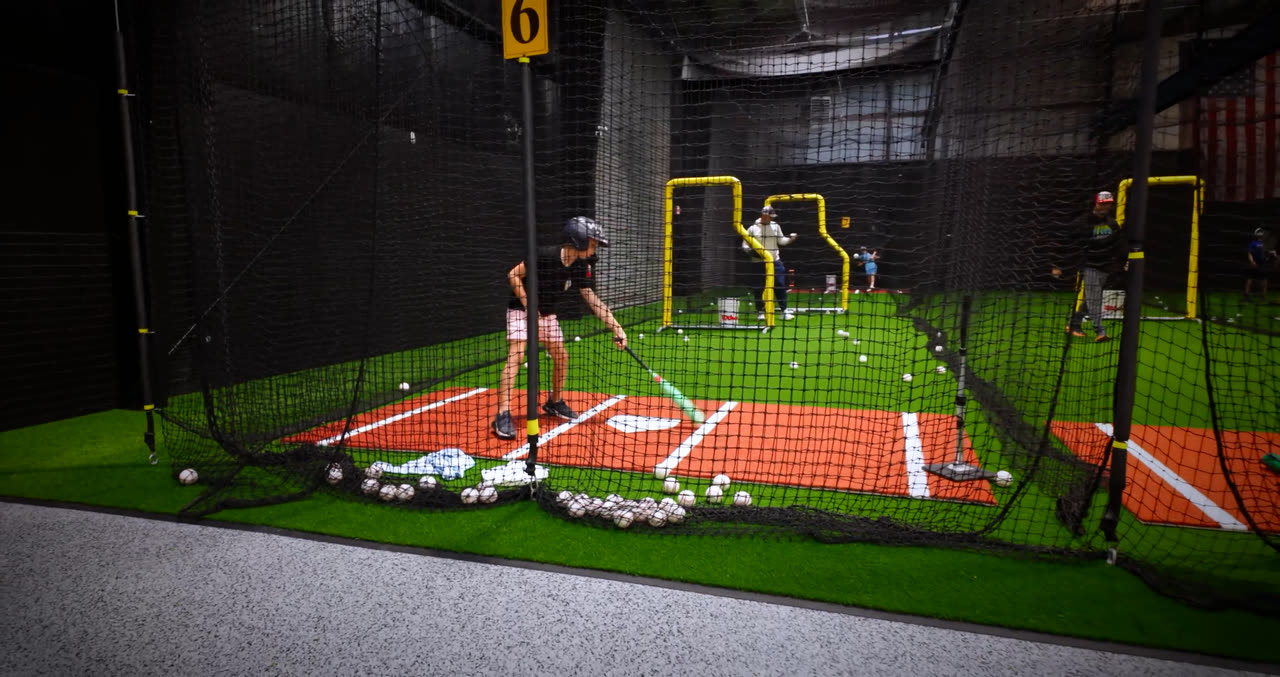
This is a coach favorite for building bat speed fast. Your hitter takes swings with a slightly heavier bat, then a slightly lighter bat, then their normal bat. The heavy bat teaches the body to push harder, and the light bat teaches it to move faster. Alternating between the two trains the muscles to fire quicker without losing control.
- 5 swings with the heavy bat
- 5 swings with the light bat
- 5 swings with the game bat, feeling the new speed
Keep the weights small — too heavy and the swing falls apart. A good rule of thumb is no more than about 20% heavier or lighter than the game bat. We keep the right training bats on hand in our cages so you never have to guess, and a coach can watch to make sure the mechanics stay clean while the speed climbs. The goal is a faster game swing, not a bigger workout.
Drill 2: Turn and Burn (Hip Rotation)
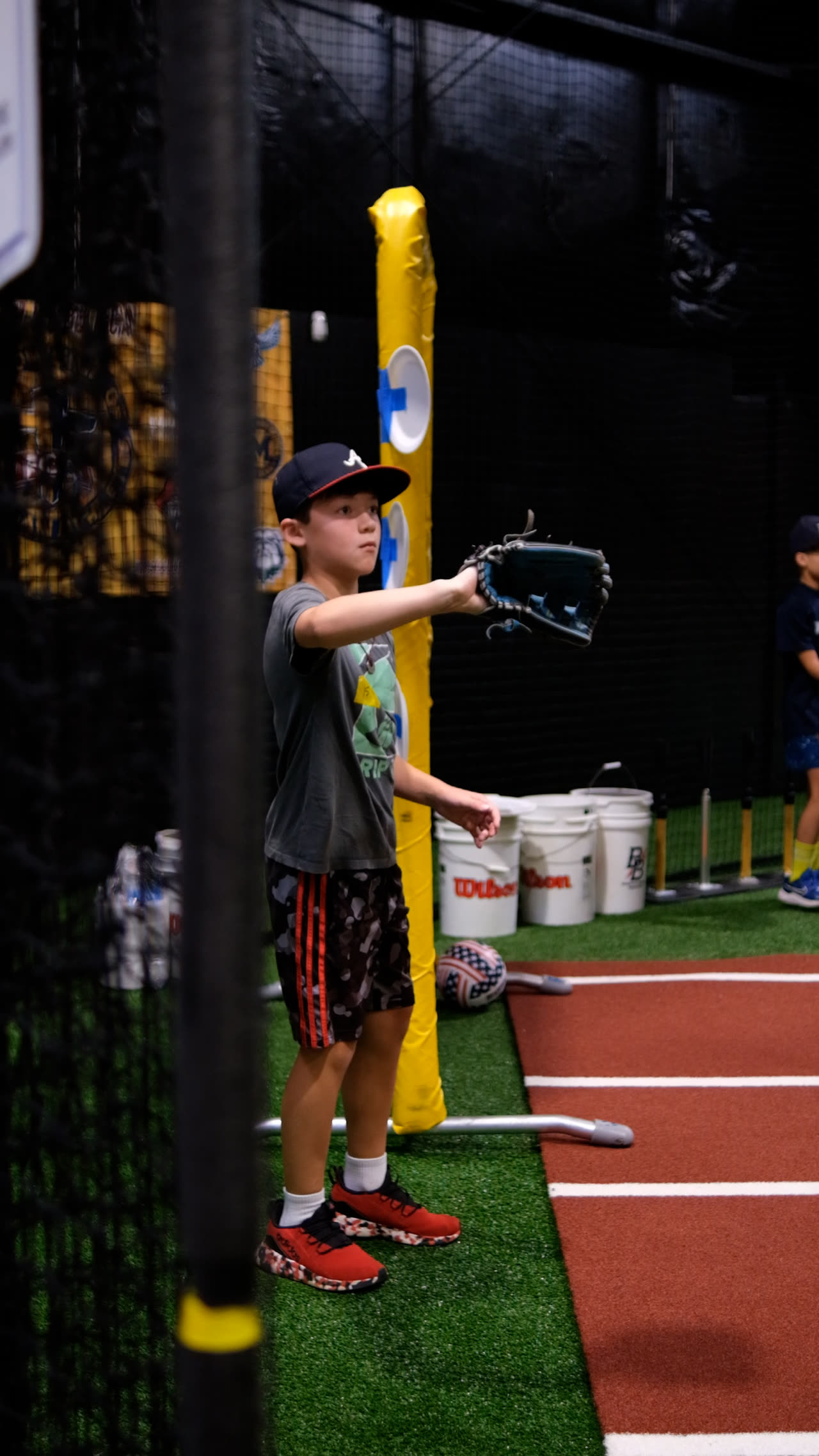
Real power does not come from the arms. It comes from the ground up, through the legs and hips. This drill has your hitter freeze at the start of the swing, then explode their back hip toward the ball as fast as they can. The faster the hips turn, the faster the bat follows.
Most young hitters swing with their arms and leave a ton of speed on the table. When we teach them to lead with the hips, the exit velocity number often jumps within a single session. Big power starts below the belt. A simple cue we love: tell your hitter to “show the pitcher your back pocket.” That little picture gets the hips firing first, and the hands come along for the ride instead of doing all the work.
Drill 3: Max-Effort HitTrax Rounds
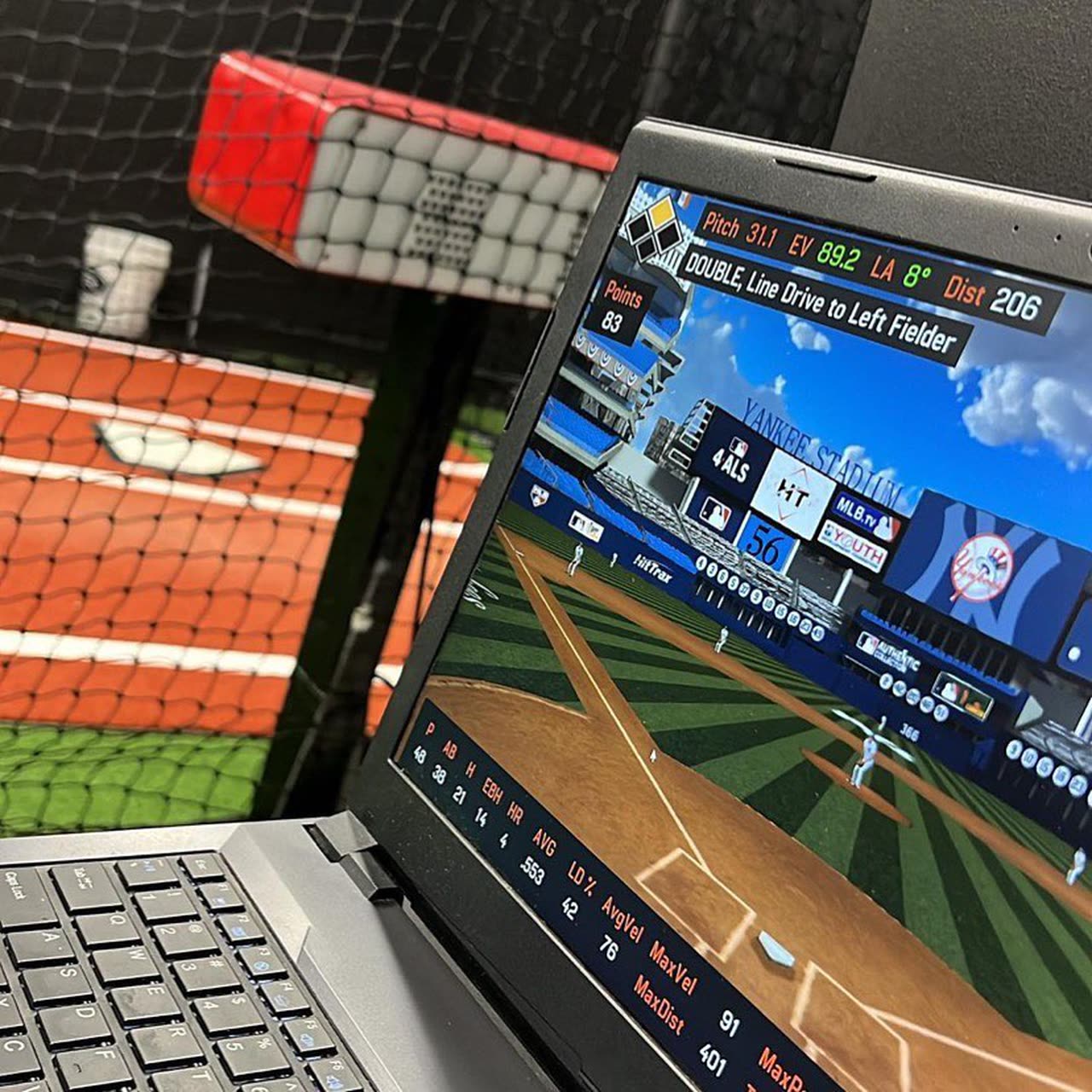
Sometimes a hitter just needs permission to let it rip. In a max-effort round on our HitTrax machine, your player swings for the biggest number they can, ball after ball. We are not worried about perfect placement here — we are teaching the body what full-effort feels like.
Once a hitter feels their top-end speed, they can learn to control it. The HitTrax screen shows the exact exit velo on every swing, so your kid gets instant feedback and a clear target to beat. It turns practice into a game, and kids compete hardest against their own best number. We usually cap these at short bursts of eight to ten swings so the effort stays true and the swing does not get sloppy from fatigue. When a hitter unlocks a new personal best, that confidence carries straight into the next at-bat on the field.
Drill 4: Medicine Ball Rotational Throws
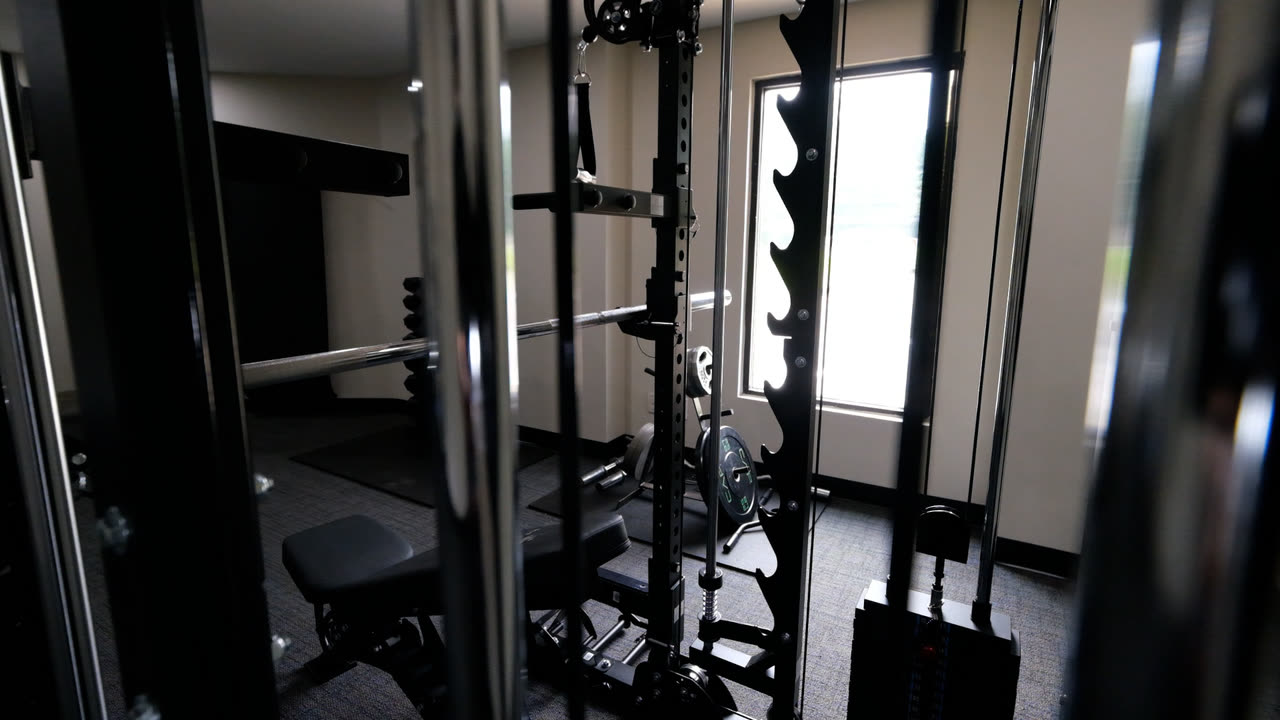
This one happens in our brand-new weight room, and it is one of the best power builders we have. Your hitter holds a light medicine ball, loads their hips like a swing, and throws the ball hard into a wall using their whole body. It teaches the exact rotational explosion a great swing needs — just without a bat in the way.
A few sets of these each week and you build the core and hip strength that shows up as extra MPH at the plate. Quincy, our performance coach and former NFL athlete, folds throws like these into his speed and power work so young hitters get truly athletic, not just handsy. Stronger, more explosive athletes hit the ball harder — every time.
Drill 5: Front-Toss Pull-Side Drive
Hitters make their hardest contact when they catch the ball out front and pull it with authority. In this drill we soft-toss balls to the inner half and ask your hitter to drive them hard to their pull side. Catching the ball out front lets the barrel reach full speed at contact.
Done a few rounds a week, this drill grooves the timing that lets a hitter unload everything they have built in the other four drills. It ties it all together. Contact out front is where the loud swings live. Watch for the ball coming off the bat on a strong line drive — if your hitter is rolling over and hitting weak grounders, the contact point is a touch too deep, and moving the toss slightly more out front usually fixes it on the spot.
How Often Should You Do These?
Two to three focused sessions a week is plenty for most youth hitters. Quality beats quantity every time — ten great swings will build more power than a hundred lazy ones. Rotate the drills so your hitter stays fresh and keeps improving on every part of the swing.
Remember our mantra: the difference is just 1% better every day. You do not need a huge leap. You need a small win, over and over, until the loud contact becomes normal.
How to Track Progress Without Nagging
One of the biggest favors you can do your hitter is let the numbers do the coaching. Instead of telling your kid to “swing harder,” let them chase a target on the HitTrax screen. Kids respond to a scoreboard far better than a lecture. Jot down their best exit velo every couple of weeks and you will both be able to see the climb.
- Log a top exit velo number every two to three weeks
- Celebrate personal bests, not just game results
- Let small, steady gains do the talking
When a kid sees proof they are getting stronger, they stay motivated on their own. Motivated hitters put in the reps that build real power.
Book Your Cage and Start Building Power Today
Ready to see your hitter’s exit velocity climb? Come see us and put these drills to work with our HitTrax simulators, training bats, and new weight room. Our coaches will build a plan around your player and track every step. Book Your Cage — call or text us at (770) 779-9462 or visit cage-time.com. We are at 4946 Cobb Pkwy NW in Acworth, GA, proudly serving hitters across Acworth, Kennesaw, Woodstock, and all of Cobb County. Greatness happens in the cage — come get 1% better with us today.
Ready to get 1% better?
Book a cage, a lesson, or a membership at Cage Time Acworth.
Book Your Cage