

Picture this: your young pitcher grabs a ball, walks to the mound, and starts firing fastballs while their arm is still cold from the car ride. It happens more than you’d think, and it’s one of the fastest ways to end up with a sore, tired arm. Here’s the good news: a smart warm-up takes about ten minutes and can protect your player’s arm for years. At Cage Time Acworth, we teach every young pitcher the same simple routine, and today we’re sharing it with you so your player takes the mound ready to compete.
Why Warming Up Is Non-Negotiable
Muscles are a lot like taffy. When they’re cold, they’re stiff and snap easily. When they’re warm, they stretch and move without tearing. A warm arm throws harder, more accurately, and with far less risk of injury. Skipping the warm-up to save a few minutes is one of the worst trades in youth sports.
A good warm-up also gets your player’s head in the game. Those few minutes let them settle their nerves, find their rhythm, and focus on the task ahead. A calm, warm pitcher is a confident pitcher. The routine below builds both the body and the mind, step by step.
There’s a bonus most parents don’t realize, too. A consistent warm-up doubles as an early-warning system. When your pitcher goes through the same movements every time, they notice right away if something feels off, whether it’s a tight shoulder or a cranky elbow. That daily body check catches small problems before they turn into big ones. A routine you repeat is a routine that protects.

Step 1: Get the Whole Body Moving
Before the arm ever touches a ball, the body needs to warm up. Pitching uses everything, from the legs to the core to the shoulder, so the warm-up should too. Start with light movement to raise the heart rate and loosen everything up.
- A light jog for three to five minutes to get the blood flowing.
- Leg swings and lunges to wake up the hips and legs, which do a huge amount of the work in a good pitch.
- Arm circles and trunk twists to loosen the shoulders and core.
This isn’t a workout. It’s a wake-up call for the muscles. Easy and gentle wins here. If your player is breathing a little and feeling loose, they’re ready for the next step. A good sign the body is ready is a light sweat, that’s the green light to move on.
Step 2: Band Work and Arm Care
Resistance bands are a pitcher’s best friend. A few minutes of simple band exercises wakes up the small muscles around the shoulder that keep the arm healthy. These little muscles are the ones that protect the big joints. Skipping them is like driving without a seatbelt, everything’s fine until it isn’t.
We teach a short band routine that targets the shoulder and upper back. It only takes a few minutes, but it makes a real difference in keeping young arms strong and durable. Healthy shoulders throw more strikes. The best part is that bands are cheap, portable, and easy to use in the backyard, so this habit follows your player everywhere.
Step 3: Easy Throwing Progression
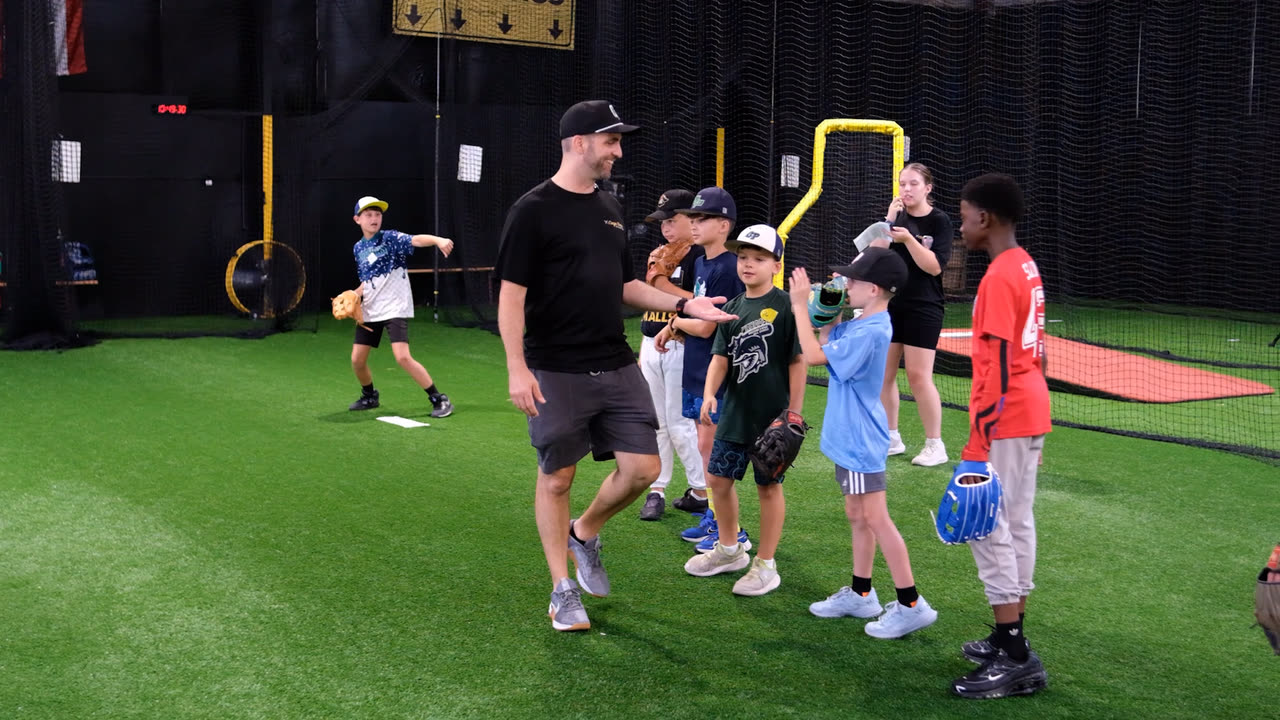
Now the arm is ready to throw, but not at full speed yet. The goal is to build up gradually, the same way you’d ease a car up to highway speed instead of flooring it from a stoplight. Never let a young pitcher start by throwing hard.
How the Throwing Build-Up Works
- Start close with soft, easy tosses about ten feet apart.
- Step back slowly and add a little distance every handful of throws.
- Keep the effort light at first, letting the arm loosen as the distance grows.
- Come back in and finish with throws on a flat line at a comfortable, controlled pace.
By the end of this progression, the arm is loose, warm, and ready. Only then should a pitcher move to the mound and start ramping up toward game speed. Rushing this step is where sore arms are born.
Step 4: Bullpen and Mental Prep
The final step is a short bullpen: a handful of pitches from the mound to dial in the strike zone and get comfortable. This is also the moment for your pitcher to slow their breathing and lock in. A few deep breaths and a clear plan turn a nervous kid into a focused competitor.
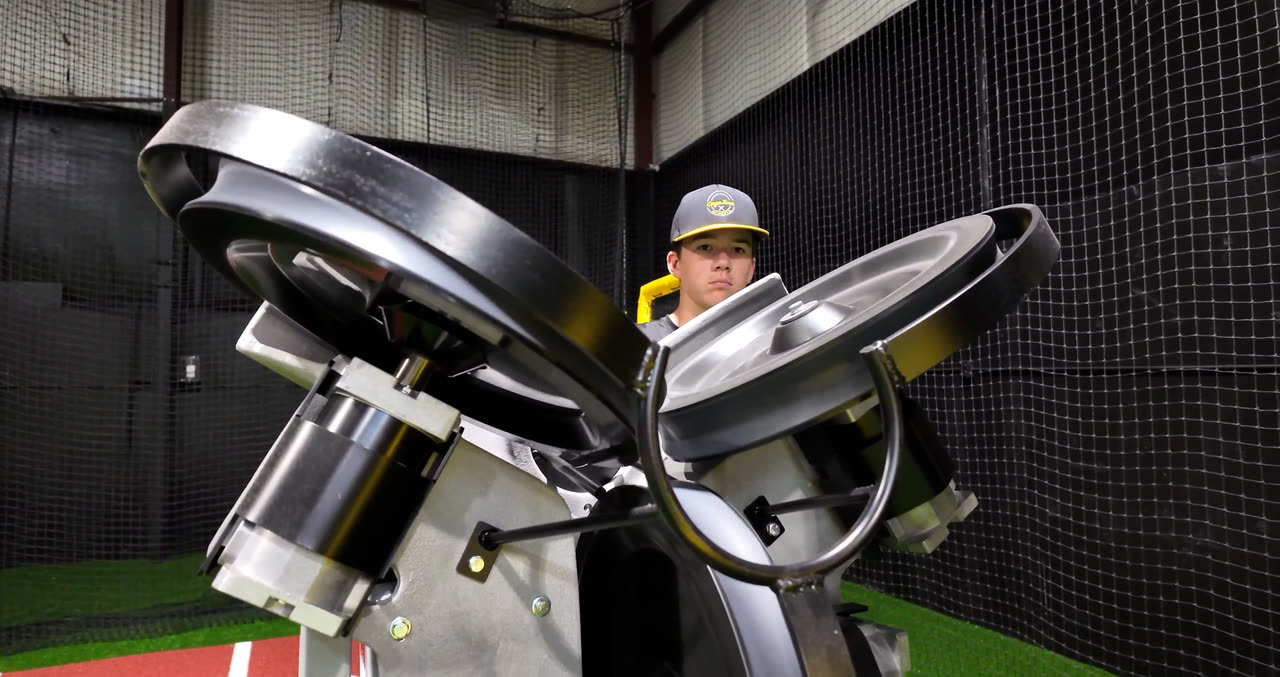
At Cage Time, our Hack Attack pitching machines and private lessons help players build the muscle memory that makes this whole routine automatic. When the warm-up becomes a habit, your player stops thinking about it and just does it, every single time. Good habits become great outcomes.
Common Warm-Up Mistakes to Avoid
Even families who know a warm-up matters can trip over a few easy-to-fix mistakes. Here are the ones we see most often, so you can steer clear of them:
- Starting too hard, too fast. Firing bullets on the first few throws defeats the whole purpose. Ease into it.
- Skipping the lower body. A pitch starts in the legs. Warming up only the arm leaves most of the engine cold.
- Doing it once and stopping. If your pitcher sits for a long inning on the bench, they need a few throws to stay loose before going back out.
- Rushing because you’re late. Being late to the field is never worth a short-changed warm-up. Better to build in extra time.
None of these are hard to fix. Just knowing about them puts you and your player ahead of most of the teams you’ll face. Small tweaks add up to a healthier arm.
Making It a Routine They Own
The best part about a warm-up routine is that it’s repeatable. Once your player learns it, they can do it before every practice, every bullpen, and every game. Consistency is what turns a warm-up from a chore into an edge. It’s the same idea behind our mantra: get 1% better every day. A great warm-up is a daily 1% win that adds up over a whole season.
And remember, a warm-up is only as good as the coaching behind it. Our team teaches proper mechanics, watches for red flags, and builds full arm-care into every lesson. With our brand-new weight room and speed training led by Quincy, a former NFL athlete, your player builds the total-body strength that makes pitching safer and stronger. A strong athlete is a durable athlete.

Give Your Pitcher the Best Start. Book Your Cage
Ready to help your young pitcher build a warm-up routine they can trust? Book Your Cage today by calling or texting (770) 779-9462, or head to cage-time.com to get started. Our coaches will teach the fundamentals that keep arms healthy and confidence high. We’re proud to train players across Acworth, Kennesaw, Woodstock, and all of Cobb County. Stop by 4946 Cobb Pkwy NW in Acworth, and follow us @cagetimeacworth. Greatness happens in the cage.
Ready to get 1% better?
Book a cage, a lesson, or a membership at Cage Time Acworth.
Book Your Cage